This is the second of, maybe, 4 posts, for the New Year, New Inner You series. I.O.U.S. Prayer – New Year, New Inner You is the first post in the series.
“Hope” is the thing with feathers –
Hope is the thing with feathers (257) – Emily Dickenson
That perches in the soul –
And sings the tune without the words –
And never stops – at all –
And sweetest – in the Gale – is heard –
And sore must be the storm –
That could abash the little Bird
That kept so many warm –
I’ve heard it in the chillest land –
And on the strangest Sea –
Yet – never – in Extremity,
It asked a crumb – of me.
As years go, 2025 is still a baby.
Time for resolutions. According to a Statista poll the top 5 are:
- to save more money,
- to eat healthier,
- to exercise more,
- to lose weight, and,
- to spend more time with family and friends

Did you make one of these?
Would you consider adding another? Learn to suffer well.
Wait. What?
I’m suggesting that learning to suffer well will help us to be successful this year in spite of the vicissitudes of life.
Let’s you and I make it one of our New Year’s resolutions to suffer well.
I do not suggest this glibly. The fact is that you are likely to have amazing moments of celebration.
The ones that catch you by SURPRISE!!! (You had no idea your friends could keep a secret so well, did you?)

This year, like other ones, will also likely have moments that are, well, ordinary.
Working, working out, worshipping, cooking dinner: husbands, you will drop off your wives, and, parents, you’ll pick up your kids.

This year will inevitably also bring you to places, perhaps, even for an extended period of time, whose destinations are unpleasant, unbidden or unavoidable.
In 2025, there will be pain. Yes, this year, there will be suffering.
If it’s going to happen why not prepare for it?
For the ones of us who resist the idea of readying oneself for suffering and pain I offer this thought: the insurance industry exists to ensure that, for a price, we suffer well.

In addition, we own umbrellas, flashlights, an extra set of keys, smoke alarms, warranties and so on. These are designed to minimize certain kinds of inconvenience and discomfort, that is to say, suffering.
You may have never thought about suffering in this way. Part of the issue may be that suffering is such a broad category.
To suffer:
Merriam Webster
to endure death, pain, or distress;
to sustain loss or damage;
to be subject to disability or handicap
What a vast emotional landscape! All the way from death to stress and distress:
~ enduring the death of a dear relative, or
~ over using your credit card, or
~ habitually losing your temper, or
~ sorrowing over a damaged relationship.
All very different things and, yet, all, justly, can be suffering.
Having hope in the midst of suffering and pain helps us to “grow through” what we’re going through. Having hope helps us to suffer well.
Hope is desire accompanied by expectation of or belief in fulfillment
Merriam Webster
While there are bound to be more, you can learn to suffer well through finding hope in at least 3 ways:
Forget Optics
Merely being seen with the “wrong” person could have the life altering consequence of being shunned (i.e. cancelled) in the polite society of certain periods of time.
In our day, social media tools help us emulate, celebrate and, even, elevate real life. Some tiktoks, shorts, reels and stories are uproariously entertaining and downright ratchet all in the same video; while others turn a meaningful lens on worthy causes and vital concerns.
But you and I are more than mere content creators posting a curated product for an audience. This is your life and mine: raw footage, no edits.

When life is painful try the humble route. Humble looks like admitting the need for help.
Humble sounds like the silence of listening while allowing another to tell you their experience of you. Humble is willing to look a little out of place and to feel uncomfortable while holding on to the hope of a future fulfillment of desires.
One of the most humble things you can do is to pray. 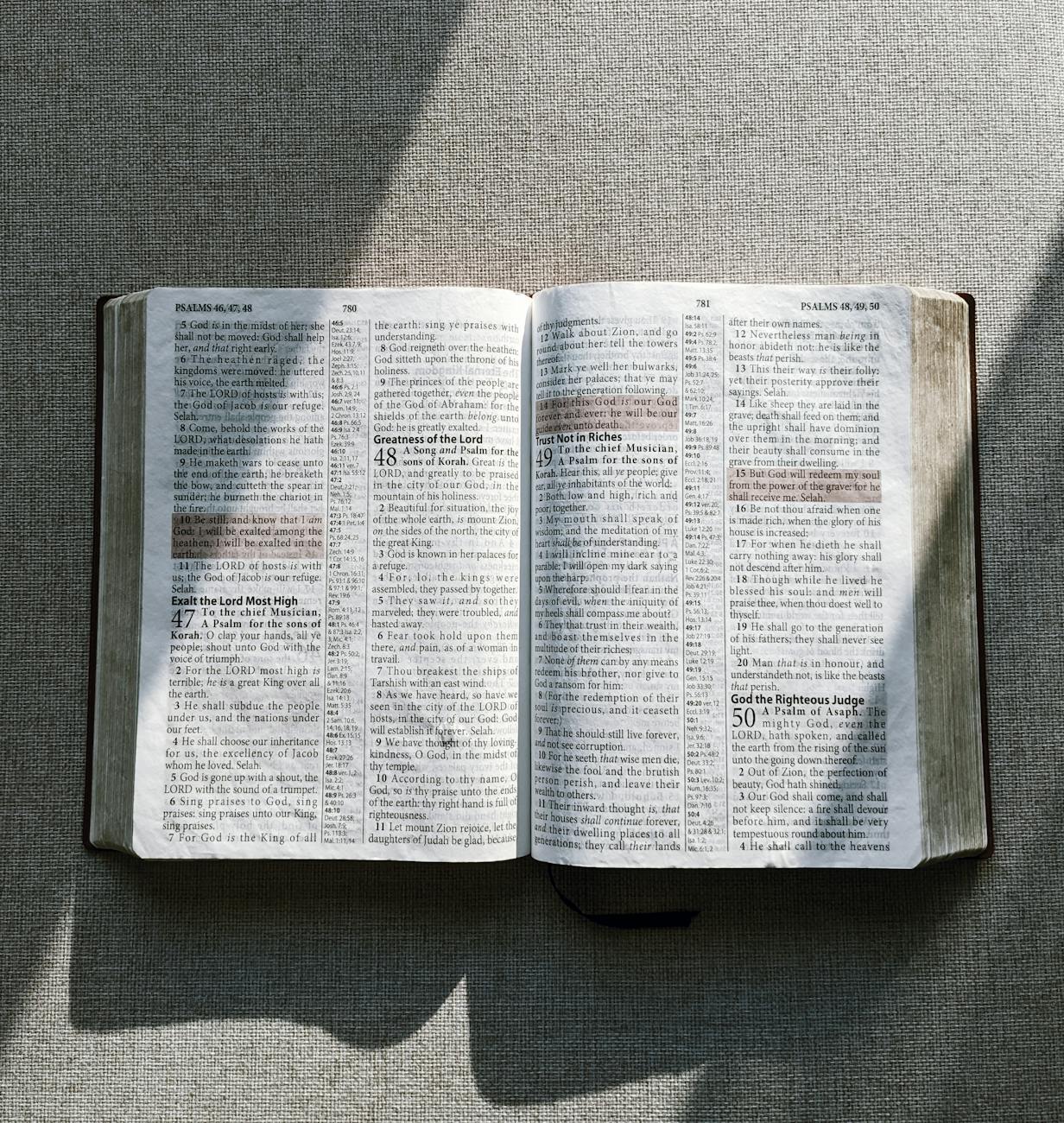
This is Jesus speaking.
Matthew 6:6 But when you pray, go into your room, close the door and pray to your Father, who is unseen. Then your Father, who sees what is done in secret, will reward you.
Won’t you take the chance and humble yourself to reach out through prayer and let this glorious and gracious Someone tell you their experience of you? Won’t you let Jesus help you?
The LORD wants to send you help for your “now.” Jesus is also concerned about your “next.” He died for you because He loves you and wants you to spend your eternal life with Him.
Face It
We cannot fix what we will not face.
For some of us one of the hardest things to do is to face whatever the “it” is. To face it, means to realistically assess the dilemma, and, to address it.
In Forget Optics we humble ourselves not concerning ourselves with what others think of us to accept our situation.
I have observed that, sometimes, we are willing to go through the awkwardness of forgetting the optics and still not actually face the issue.
That is we resist the tough tasks of assessing and addressing the issues through appropriate action or reflection.
Facing the issue can be scary. 
In Face It we start to figure out, find out and go after those strategies to help our situation, that give us hope and, which will, therefore, help us to suffer well.
The great temptation of the Face It stage is to pretend that you don’t know what you know.
In my case, one of my face it moments came at the finale of an amazing, out-of-state family event. I got a speeding ticket. It was a bad, big one.
I was rushing home to beat the rush hour back home.

That rush was super expensive: I had to hire a lawyer, take a class, pay a fine and court fees. Ultimately, though, the largest cost was to “face it.”
I had to pay focused attention to how that awful ticket came about. The Commonwealth of Virginia may be happy to know that the course they made me pay for and sit through helped my reflection.
I had to face that the officer wasn’t out to “get me.” Rather, I have a history of getting into trouble of varying kinds when I move too fast – literally and figuratively.
I never saw my life quite THAT way before THAT ticket. I had never faced what rushing, or, said another way, what a pervasive lack of patience, cost me at various points in life.
Depending on the depth of the issue you, too, may need help to face your dilemma, hopefully, not speeding-ticket help.
Forgive It
My first round of therapy was life changing. I say that without hyperbole, truly, in the most positive way, life changing.
I told NO ONE about the counseling I was receiving, especially my parents because I knew that they would not support it. I was still living at home at the time.

In counseling, I struggled with the challenges of my mind which affected my life, my faith, and my family.
One thing that came up was the realization that many of the ugly things that occurred in my life had done so either directly because of, or, with the full knowledge of my mother.
As I grappled with bitterness and resentment my mental health grew worse for a time. I was devoured by a red-hot, inner rage, haunting regrets and depression.

In walked the gift of forgiveness, which, at first, I respectfully declined.
My therapist continued to talk to me about the possibility of forgiveness, but I resisted. I was feeling self-righteous by then.
After all, I was the kid and my mom the adult who didn’t always protect me.
As God would have it, my professor (I was in grad school to become a counselor myself) recommended a book to our class, quite off topic, about forgiveness. She only described it in superlatives. She added a statement to the effect of,
“You should try it. It’s about a subject that’s being given a secular look again although it’s considered a religious subject by some: forgiveness.”
I may have eye-rolled the ceiling knowing that God would understand the gesture.
The Forgiving Self: The Road from Resentment to Connection was truly a godsend. I read it like it was fiction.
Dr. Robert Karen writes clearly and compassionately. And, because this is an older book, if you’re interested, you can likely find it for much less than Amazon’s new book price.
Through prayer, therapy, and the good guidance of my gracious God in putting The Forgiving Self in my path, I was able to freely forgive my mother.
I could eventually see and understand that my mom had done many things right for my brothers and me, that, overall she did the best she could with the tools that she had available to her, and, that I was not destined to make her mistakes.

Mommy and I ended up having, a great, if complex, relationship. She passed away just before the Pandemic. I miss her.
While therapy still had painful moments, forgiving my mom helped me find contentment and gave me hope for a future of peace and productivity while I worked to obtain my goals.
There’s more that can be said about suffering well, but, we’ll pause here.
Strangely, it can be comforting to know that you are not the only one in this traffic delay or suffering in this life.

As I write today, wildfires are burning in the Los Angeles, California area. The fires have burned the homes and neighborhoods of the middle class, as well as those of the wealthy and well-known.
EVERYONE suffers, but not everyone suffers well.
Whatever you’re experiencing today hold onto hope “the thing with feathers.” Do not give up. God will help you.
If you are willing to take it, God offers this lifeline:
Isaiah 41:10 Fear not, for I am with you;
be not dismayed, for I am your God;
I will strengthen you, I will help you,
I will uphold you with my righteous right hand.
Blessings!
xoxoKimberly
I love Therapy in a Nutshell and I also love The Body Keeps the Score by Bessel van der Kolk. Imagine my delight when I discovered that Emma McAdam, the therapist behind the YouTube channel Therapy in a Nutshell, decided to summarize this extremely informative and popular book. Enjoy!





 Help! Love, MOM
We’d love it if you’d leave a comment.