The Resurrection of Jesus: A Historical Inquiry
The assertion that Jesus of Nazareth rose from the dead is central to my Christian faith as it is for all traditional, bible believing Christians.
At my best and most spiritual, I tend to see the world through the positive lens of the resurrection.
The resurrection is, by its very nature, a hopeful lens and gaze, so says Dr. Esau McCauley, professor at Wheaton College and a contributing opinion writer for The New York Times, The Atlantic, The Washington Post, and Christianity Today. Dr. MCauley opines that a resurrection-focused life means, “Living with the confidence of God when the evidence in front of me suggests the opposite.”
However, I am surprised, shocked, astounded, and somewhat disheartened, actually, to discover that there are those folks who say that they are Christians but who don’t hold at least two core Christian beliefs. Namely that:
—Jesus rose bodily from the grave. They tend to not believe that the resurrection is a historical event. At most, these folks may say that the resurrection is a metaphor for renewal.
To be clear, while Jesus’ resurrection is a powerful metaphor for new life , doctrinally conservative Christians also believe the resurrection to be historical fact.
Jesus is God. While Jesus never says explicitly, “I am God,” he makes several statements that were understood by His audience to be the equivalent.
For example, when Jesus, as recorded in John 10:30, states, “I and the Father are one,” it lands, as intended, with the hearers that Jesus is God. We can confidently draw this conclusion from the reaction in the next verse, John 10:31: “The Jews picked up stones again to stone him [Jesus].”
In addition, John 1:1 and John 1:14 are foundational, stating, “In the beginning was the Word, and the Word was with God, and the Word was God… And the Word became flesh and dwelt among us.” These verses directly link Jesus (the Word) to both divinity and incarnation.
Also, Colossians 2:9 affirms, “For in Him all the fullness of Deity dwells in bodily form,” emphasizing that Jesus is fully God in human form.
Titus 2:13 refers to Jesus as “our great God and Savior,” clearly attributing divinity to Him.
Next, Hebrews 1:3 describes Jesus as “the radiance of the glory of God and the exact imprint of His nature,” reinforcing the belief that Jesus embodies God Himself. These scriptures, and others, collectively form a strong biblical foundation for the doctrine that Jesus is God in the flesh.
Finally, this brief article addresses the issue more fully.
However, for those who approach this claim with skepticism or doubt, the question remains: Is there credible evidence to support the bodily resurrection of Jesus?
In this exploration, we will examine the historical evidence surrounding the resurrection of Jesus, drawing on evidence and insights gathered by the author of The Case for Easter, Lee Strobel, a reporter for over 14 years at various newspapers, a former investigative reporter, atheist, and an award-winning legal editor at The Chicago Tribune.
We will also utilize the work of scholar and Distinguished Research Professor at Liberty University, Dr. Gary Habermas who authored The Case for the Resurrection of Jesus. Together these 2 writers will supply crucial arguments worthy of serious consideration to the genuine seeker. Which, I hope, is you.
The Significance of the Resurrection
For Christians, the resurrection is not merely a theological concept but a pivotal event that validates Jesus’ teachings, His divine nature and the Christian’s eternal place and peace with God.
Lee Strobel, a former journalist emphasizes the centrality of the resurrection in Christianity:
“I think fundamentally, the question of whether or not Christianity makes sense… always comes down to the Resurrection.”
This perspective underscores the importance of examining the resurrection claim critically.
Evaluating the Evidence
1. Early Testimony
One of the strongest arguments for the resurrection is the early and widespread testimony of those who claimed to have witnessed the risen Jesus. Dr. Gary Habermas, a leading scholar on the subject, notes:
“There is a virtual consensus among scholars who study Jesus’ resurrection that, subsequent to Jesus’ death by crucifixion, His disciples really believed that He appeared to them risen from the dead.”
This consensus among scholars, including those who are skeptical of supernatural claims, lends credibility to the assertion that the disciples genuinely believed in the resurrection.
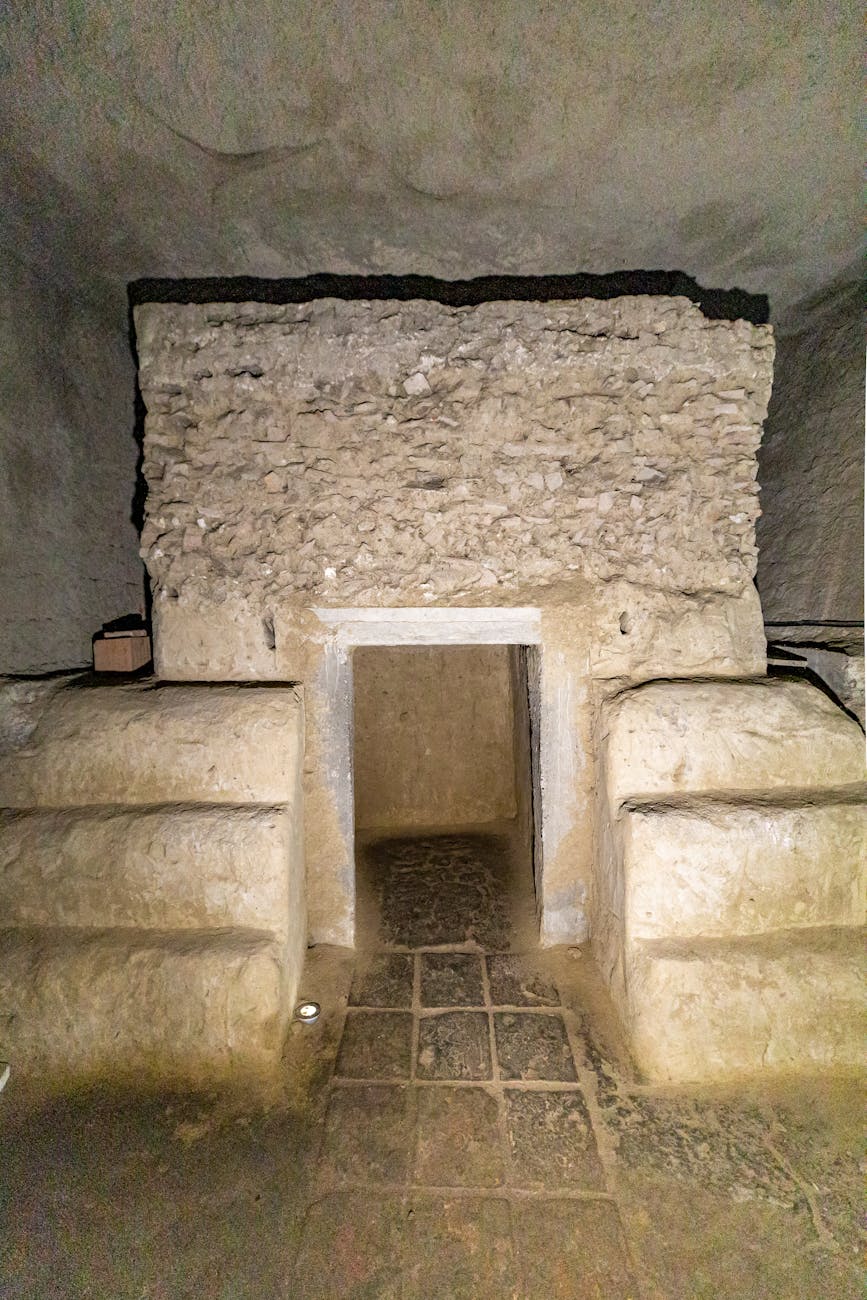
2. The Empty Tomb
The discovery of Jesus’ empty tomb is another piece of evidence that supports the resurrection claim.
If Jesus’ body had remained in the tomb, it would have been easy for opponents of Christianity to disprove the resurrection by producing the body.
The fact that no such body was produced suggests that the tomb was indeed empty. Dr. Habermas observes:
“The city of Jerusalem is absolutely the last geographical location the disciples would preach the resurrection if Jesus’s grave was still occupied.”
This indicates that the early Christians were proclaiming the resurrection in the very city where Jesus had been buried, which would have been implausible if the tomb had not been empty.
3. Transformation of the Disciples
The dramatic transformation of the disciples from fearful individuals to bold proclaimers of Jesus’ resurrection is noteworthy.
This change is difficult to explain unless they had experienced something profound.
Again, Habermas argues:
“The disciples died for holding to their own testimony that they had personally seen the risen Jesus. Contemporary martyrs die for what they believe to be true. The disciples of Jesus died for what they knew to be either true.”
This distinction suggests that the disciples were not merely acting but living out their firsthand experience.
Addressing Common Objections
Skeptics often propose alternative explanations for the resurrection accounts, such as hallucinations or conspiracy theories. However, these theories face significant challenges:
- Hallucinations: It is highly improbable that 500 individuals would have the same hallucination at the same time. As Strobel points out: “If 500 people claimed to see Jesus after he died, it was just a hallucination. Hallucinations are an individual event. If 500 people have the same hallucination, that’s a bigger miracle than the resurrection.”
- Conspiracy: The idea that the disciples fabricated the resurrection story is unlikely, given their willingness to suffer and die for their beliefs. Habermas notes: “If the disciples stole the body [of Jesus], they would not have been willing to die, in all probability, for a known lie or fraud. Liars do not make good martyrs.”
These considerations make alternative explanations less plausible.
Conclusion
While the resurrection of Jesus cannot be proven with absolute empirical certainty, the historical evidence supporting it is both abundant and compelling.
The early, widespread testimony of witnesses, the empty tomb, and the transformation of the disciples all point to the plausibility and probability of the resurrection claim.
For skeptics and seekers alike, it is worth considering the evidence and the implications that evidence reveals. As Strobel concludes:
“The Resurrection is the supreme vindication of Jesus’ divine identity and His inspired teaching. It’s the proof of His triumph over sin and death. It’s the miracle of all miracles.”
Truly I pray that this evidence may lead to a deeper understanding of one of history’s most significant events.
You may even become a Believer. Lee Strobel did.
He is Risen! He is risen indeed!
The Case for Easter by Lee Strobel;
Lee Strobel converted to Christianity; super long, if interested do make use of the chapter feature of the video
The Case for The Resurrection of Jesus by Dr. Gary Habermas







 Help! Love, MOM
We’d love it if you’d leave a comment.