To all of our military families whose dear ones have made the ultimate sacrifice we acknowledge and celebrate their brave service on this Memorial Day.
Lately, I’ve been thinking about what being a mother means to both moms and their children. What does it look like to recover from parenting that “goes left.”
This is a story I’ve been hoping to be able to tell.
So far this year, among many compelling news stories, one in particular has justly captured the attention of many.
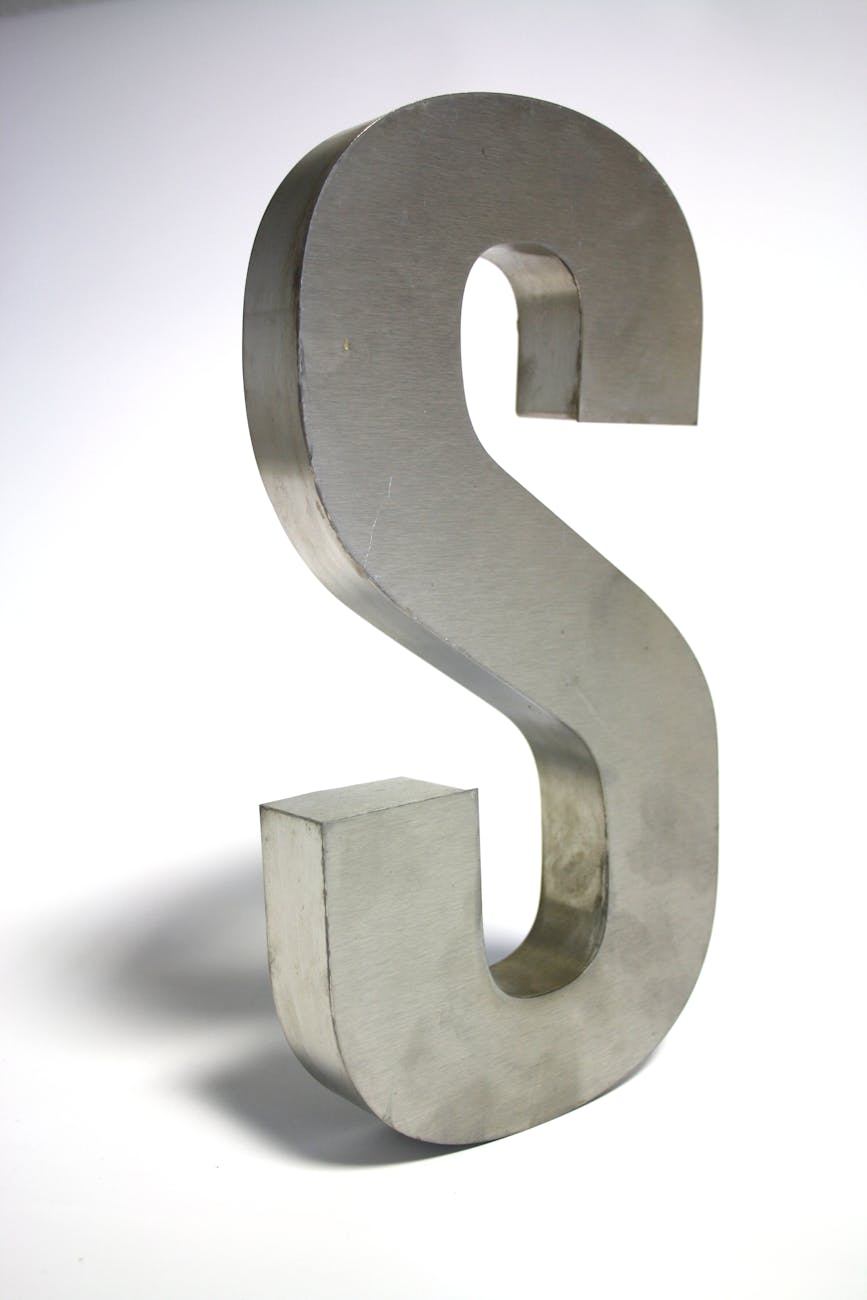
It is the real-life drama of a New England young man, 32 years old, now known only as “S,” who set fire to his prison, his home, and in doing so, courageously set himself free from physical and emotional incarceration and abuse.
For over 20 years, “S” lived in what the media called a “house of horrors” in Waterbury, Connecticut. Removed from school at 11, that is, “S” was no longer allowed to attend; he was confined to a locked room and fed barely enough to survive.
“S” endured an unimaginable nightmare at the hands of his stepmother.
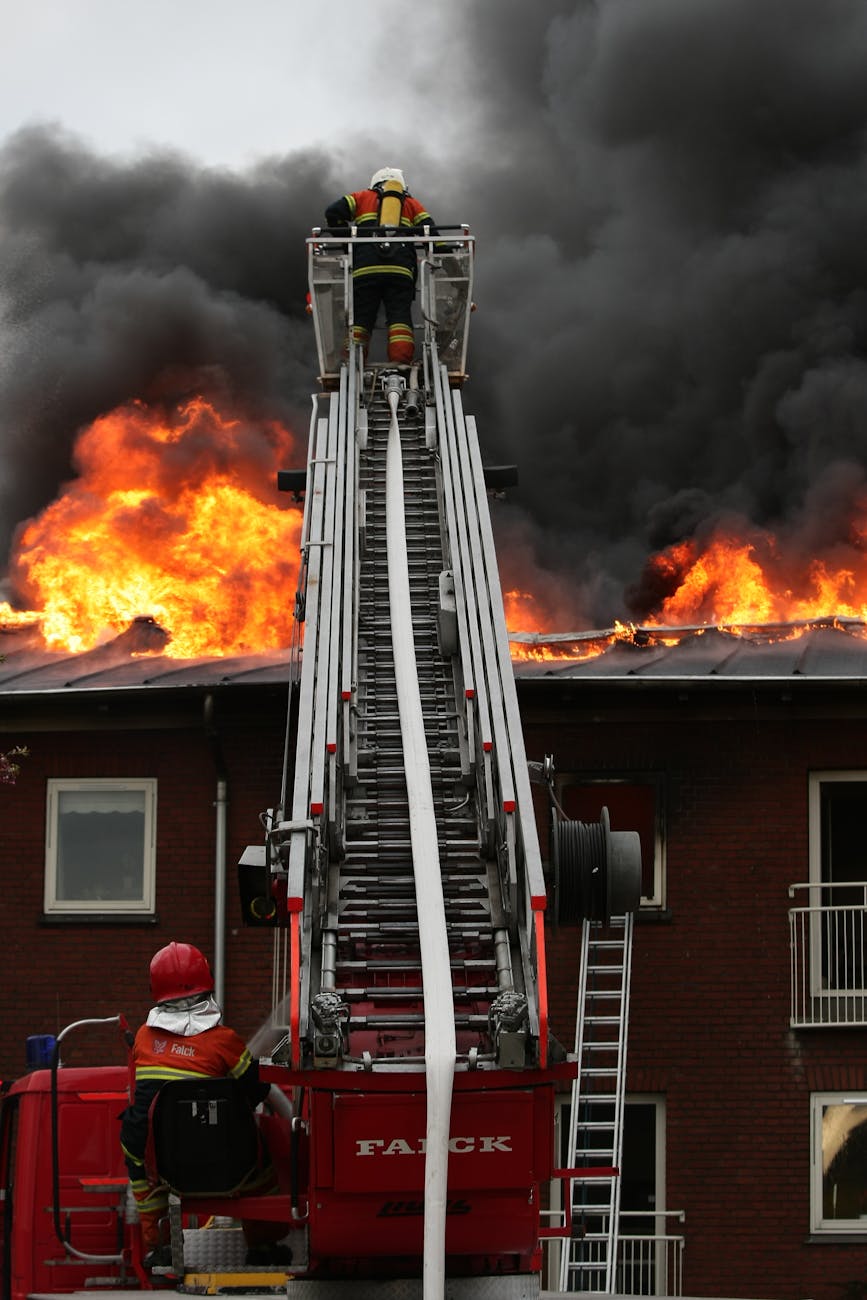
It was only in February of this year, at age 32, that “S” purposely set fire to his prison in a desperate gamble to free himself. Though weighing just 68 pounds, he was, finally, free.
An investigation revealed that the man, … “had been held in captivity for over 20 years, enduring prolonged abuse, starvation, severe neglect, and inhumane treatment,” police said, adding that he had not received medical or dental care during that time.
Amazingly this is not just a story about abuse. Rather, it is one about identity, about survival, about the sometimes perilous road to healing. Most of all, it is about the need—yes, the need—to forgive the tangled vines of motherhood, if only so that one may forge a present worthy of one’s past suffering.
The Word “Mother” Should Never Mean Captor
My most recent post titled “Mother’s Day: A Hard and Happy Celebration” explores the emotional challenges some adult children of abusive or mothers feel on days like Mother’s Day.

That post pointed to the need to honor one’s grief, one’s own reality out of a sense of self-preservation.
“S’s” story, while extreme, brings these truths into brutal focus. For we often wrap motherhood in soft hues — nurturing, selfless, safe.
However, when a mother figure becomes the source of sustained terror, control, and emotional starvation, it not only negates a stereotyped, cookie-cutter view of childrearing, it upends the very foundation of what family means.
Kimberly Sullivan is the stepmother of “S” and his alleged abuser. It appears that Ms. Sullivan imprisoned “S” since he was in elementary school.

Her actions represent the most violent betrayal of maternal trust. And yet, “S” does not rage in his first public statement. Instead, he reclaims a vital piece of his identity.
“My name is my choice,” he said. “And, it is the first of many choices I will make for myself now that I am free.”
In that one sentence, “S” does more than survive — he defines. He chooses who he is, and who he will become.
Freedom Is Not the End — It’s the Beginning of the Battle
S’s trauma is potentially vast and still unfolding. He says that among the many indginities he
~made a funnel to urinate out of a window, since he wasn’t allowed out of his room;
~rationed sandwiches as meals;
~survived the complete erasure of his childhood — no school dances, no friendships, no birthday parties.
It seems, though, that the healing process is in progress.
Now, at age 32, he also joyfully celebrated a birthday with a party, his first ever.

How is that kind of response possible?
I suggest that “S” is going forward in the healing process by appropriating the power of forgiveness.
Can Forgiveness Live Here?
This is a question for every survivor — and perhaps every reader, too. Can you forgive someone who abused or misused you?
How can the person who stole something dear to you from you deserve forgiveness?
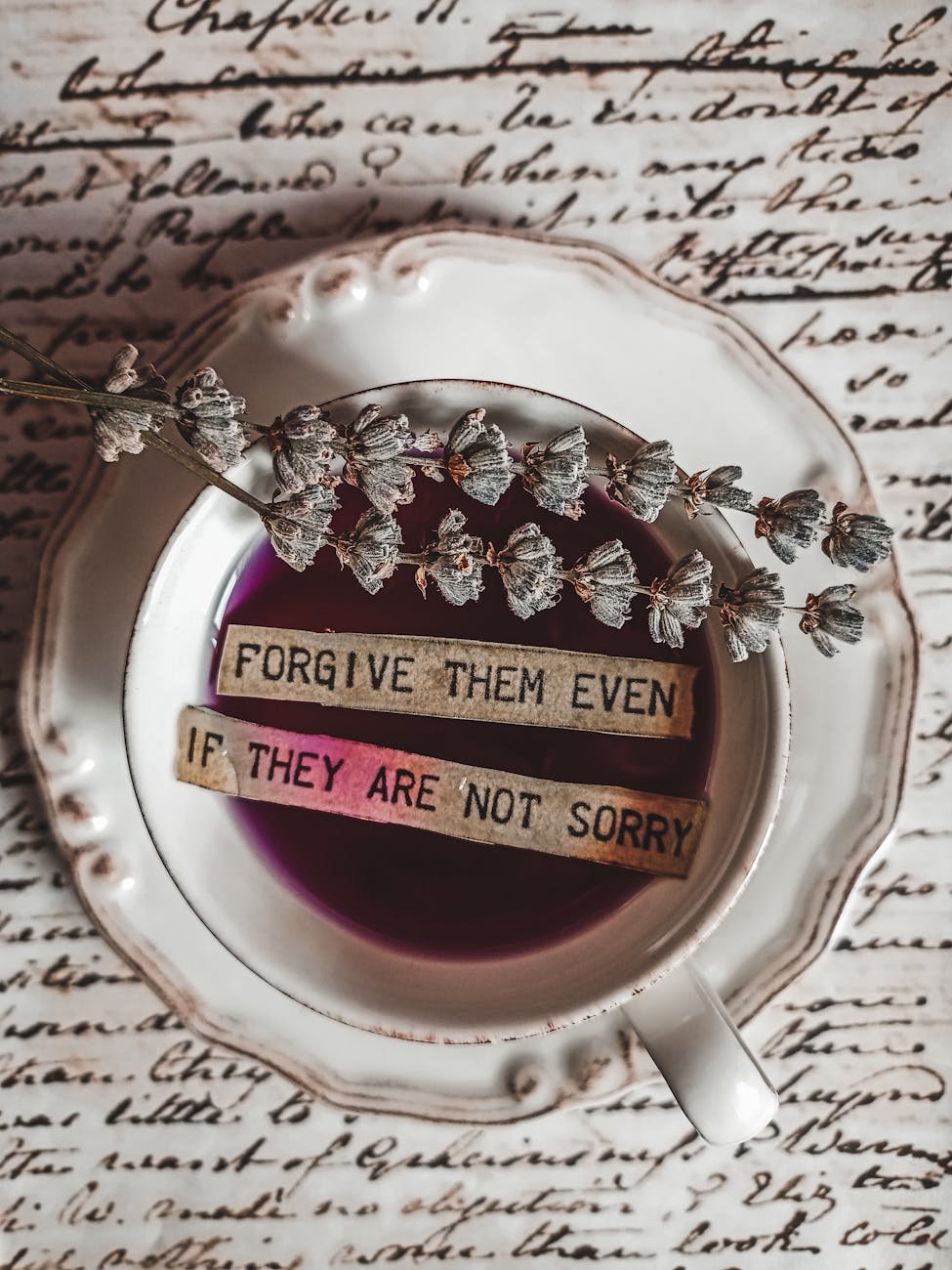
Forgiveness is not a pass for the abuser; it is a prison release for the survivor.
In my case, especially initially, forgiveness seemed not merely distasteful, not only difficult, but, truly impossible to offer. For me forgiveness was a process, painful, shameful and slow but, ultimately, worth every conflicted moment.
My parents and I went on to enjoy a close relationship for the great majority of my adult years. Forgiveness played an integral role in that restored relationship.
My therapist and I had talked about forgiveness in counseling and, as God would have it, one of my professors at almost the same time recommended The Forgiving Self: The Road from Resentment to Connection by Dr. Robert Karen to our class.
The Forgiving Self is one of my favorite books! I canNOT recommend it highly enough to you. I read it as if my life depended on it.
The LORD used this book as a means of grace in my life. Please note that the author professes no religious affiliation.
In The Forgiving Self, Karen explores forgiveness not as a moral obligation, but as a deeply personal, often hard-won process that helps restore a sense of inner coherence after profound injury.
I felt as if he precisely understood my struggle.
Dr. Karen says that for survivors of traumatic abuse — such as childhood imprisonment, physical deprivation, or cult membership — forgiveness can be a vital part of reclaiming psychological autonomy.
Karen emphasizes that the act of forgiveness does not excuse the hurt or harm done nor does forgiveness deny the impact of the injury; rather, it allows the survivor to loosen the grip of the past.
When trauma is left unprocessed, Dr. Karen says, it can keep the victim psychologically tethered to the abuser.
Forgiveness, then, is an act of inner liberation — a way of refusing to allow the abuser to dictate one’s identity or emotional state.
Karen’s insights are especially relevant for those who suffered long-term abuse in the supposed safety of home.
When a child’s developing sense of self is shaped by fear, isolation, and betrayal, Dr. Karen indicates that trauma can become embedded in their core understanding of the world.

In these cases, Karen asserts, forgiveness is not about reconciling with the abuser, but with one’s own fractured narrative. He writes:
“Forgiveness is an aspect of the workings of love. It can be a bridge back from hatred and alienation as well as a liberation from two kinds of hell: bitterness and victimhood on one side; guilt, shame, and self-recrimination on the other.”
Dr. Robert Karen, The Forgiving Self: The Road from Resentment to Connection
Karen’s perspective highlights that true forgiveness derives from love, confronts and integrates one’s own pain, rather than depends on the abuser’s actions or remorse.
When I first read TFS, I was surprised at this analysis of forgiveness.
You might rightly be surprised that I was surprised. However, up to this point, and somewhat unbiblically, I had always thought of forgiveness as an act of the will, a duty, not at all closely tethered to love.
However, Paul the Apostle declares:
Therefore, as God’s chosen people, holy and dearly loved, clothe yourselves with compassion, kindness, humility, gentleness and patience. Bear with each other and forgive one another if any of you has a grievance against someone. Forgive as the Lord forgave you. And over all these virtues put on love, which binds them all together in perfect unity.
Colossians 3:12-14 NIV
It means recognizing that while actions from minor slights all the way to abuse will happen to you and me, none of these need to define even a chapter of life and certainly not our whole story if we can forgive.
That’s good news!
Absolutely this is true from a Christian perspective.
Whenever I think of all that Christ has forgiven — and He has forgiven me all — I am challenged around my tendency to hold grudges, to make critical remarks, to be harsh or ungenerous in thought, action or inclination.
Without a doubt everyday “slings and arrows” are not on the same level as a 20 year imprisonment in terms of forgiveness. However, it is conceivable that a better quality of emotional life depends on our ability to forgive.
Through forgiveness, survivors can begin to flip the internal script of shame and helplessness. We can grasp a version of self who did not only survive, as celebratory as surviving is, but who is whole, integrated, and flourishing.
To mother oneself is a sacred, fierce act. It means feeding your body with kindness, your spirit with sensitivity and beauty and your soul with purpose. It means listening to your pain, and choosing — again and again — to love, to forgive and to live free.

This is something I am still learning to do.
We Are All Witnesses Now
“This isn’t just a story. It’s my life,” “S” said.
To those who have been abused by the ones who should have protected you: You are not alone.
Whether your scars are visible or invisible, whether your captor was a parent or partner, a stepmother or stranger — your pain is real. And, so is your hope.
Let us, daily, if imperfectly, aim to honor the true spirit of mothering: to see and savor our children, to protect and connect with our children, and, to support their launch into adult life. This is another name for LOVE.
I hope that you choose to,
Forgive and Flourish,
xoxoKimberly





 Help! Love, MOM
Leave a reply to jessicaisachristian Cancel reply